The Inclite City of Cartagena de Indias, at the time of 1741

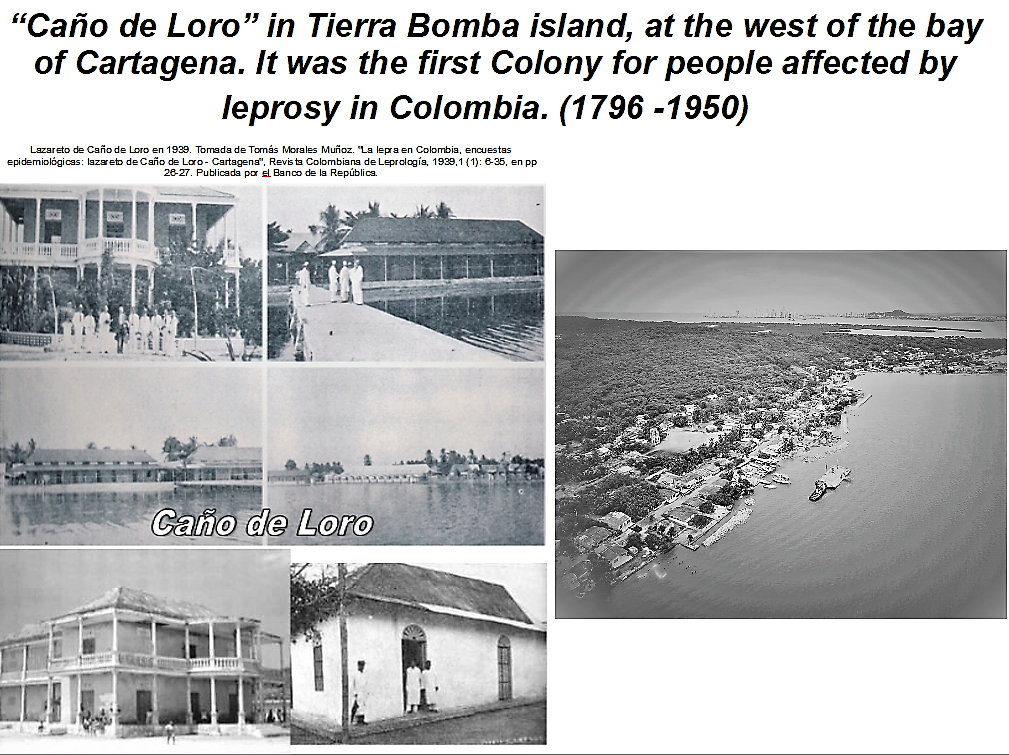
Around what was the Lazaretto de Caño de Loro (1796 -1950), the first lazaretto in Colombia settled on the Isla de Tierra Bomba (Isla Perico) in Cartagena, trades such as fishing, agriculture, the construction of boats and handicrafts. It was the time of greatest splendor of the island.
The military engineer Antonio de Arévalo y Porras, in the year 1742, proposed the transfer of the Saint Lázaro hospital to the neighboring island of Tierrabomba. He designed the project himself and chose its location at the site called Cantera Vieja, near Punta de San Mateo. It would be a large building with a square base, with a plaza with porticoes and wide corridors to which eighty rooms for patients would be given; in addition to lounges, infirmaries, men’s and women’s dining rooms.
The Hospital of San Lázaro worked in Cartagena on the corner that falls in the last auction of Getsemaní, bordering Fort Boquerón.
In 1608, this hospital was moved, for public convenience, near the Camino Real in the Cerro de San Lázaro where the Fort of San Felipe would later be installed. The hill took the name of the hospital. In 1772 there were 104 patients in the San Lázaro Hospital in Cartagena.
In 1796, the Lazarines of Cartagena were settled in what would be the first Lazaretto in Colombia baptized with the name: Lazaretto de Caño de Loro.
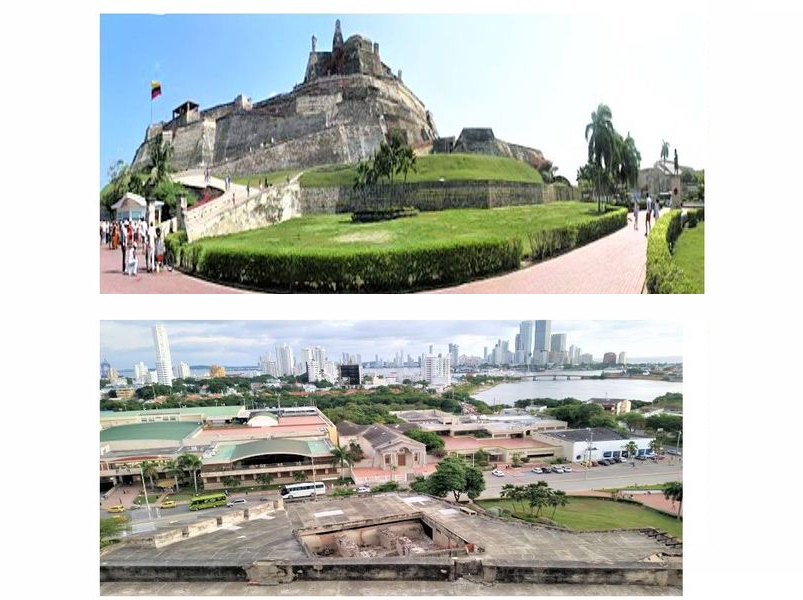
Today on the hill of San Lázaro is the Castillo de San Felipe de Barajas, a UNESCO World Heritage Site.
Cartagena de Indias, which had declared itself, in 1810, absolute independence from Spain was taken by the military expedition commanded by Pablo Morillo, the Peacemaker, who had the difficult mission of reconquering all those American provinces that were rebellious from the Spanish Crown. By fire and blood, Murillo took the city that was defended both with men and with walls and forts. In this war, some unprotected residents who were in the already established Lazaret Caño de Loro, on Tierra Bomba Island, also died cruelly.
As a tribute to all the martyrs of this fight for independence, the city of Cartagena pays tribute with a monument that is located on the median ridge that reads: “Tribute of the people of Cartagena to their unknown martyrs” and refers to the residents of the lazaret as follows: “To the unfortunate lepers who were found in considerable numbers in the Lazaret Caño e Loro and who were burned alive.”

With Decree 347, of November 8, 1887, the Governor of the National Department of Bolívar, Henrique Luis Román, reorganized the administration of the Caño de Loro lazaret and a special board was created for its management. The Board was to appoint the doctor of the establishment, who was to test the most recommended drugs for leprosy, taking a photograph of each patient before starting treatment and another at the time of reporting. The special treatment consisted first of Una and then chaulmoogra. The lazaretto, which was very deteriorated, was also repaired for this same period.
Still in 1912 the custom persisted of sending food, clothing and medicine from Cartagena in a canoe to the lazaretto. Some legal measures and provisions were:
Lazarettos may only be entered with permission from the competent authority (Article 65 of Resolution 174 of 1913). Any doctor who is consulted by a leper will be legally separated from professional secrecy (Article 1, Resolution 100 of 1919). New treatments may not be established in leprosariums or experiments to cure the disease (Article 15, Resolution 505 of 1919). Correspondence sent solely and exclusively by the Internal Postal Administration, and will be disinfected (Resolution 6 of 1921). According to resolution 17 of March 28, 1925, once the examination was carried out and an individual was declared a leper, the first political authority of the place issued him a passport whose purpose is to pay him the necessary aid to move to the lazaret that is indicated. It is set by the Government in accordance with the needs of the leprosariums (Article 17, Law 20 of 1927). The asylums for healthy children of lepers operated in places whose distance prevented easy treatment with the sick (Article 6, Law 20 of 1927). Only beers of 4% alcohol can be sold in the Lazarets (Article 4 of Resolution 39 of 1928). Transportation companies are prohibited from driving people who have been attacked with leprosy (Resolution 9 of 1929).
The lepers’ special citizenship card denied them the right to choose and be elected. The children of a leper father or mother who do not present manifestations of the same disease, will be separated from the patient. (Resolution 60 of 1933). All healthy and leprosy people residing in the isolated perimeter need to provide a pass to reach the buildings located on the outside. (Resolution 406 of 1937).
Caño de Loro had 600 affected by leprosy by the middle of the 20th century, a situation that had prompted the construction of salacunas and other enclosures, facilities that represented an advantage for the healthy community that lived on the island. They had a theater, a church (figure 4), water, electricity and market, which was attractive for the other townships and individuals who converged on those facilities,
In 1950, with Dr. Darío Maldonado Romero being the head of the Leprosy Division, Dr. Jorge Cavelier Gaviria Minister of Hygiene and President of the Republic Mariano Ospina Pérez, the order was carried out to transfer by air around 500 patients with Caño de Loro to Flandes, Tolima, and from there by train to Tocaima, from where they were taken to their new shelter, the Lazaret Agua de Dios.
The bombing of Caño de Loro was done with the antecedent of the bombing of leprochium that operated on the island of Penikese in the United States in 1921. The State of Massachusetts, around the year 1900, used the island of Penikese for patients with smallpox. from 1905 for patients with leprosy despite the protest of the inhabitants of the neighboring islands. Leprosy on the island continued until 1921 when the last six patients it housed were transferred to the Carville federal leprosarium in Louisiana. Later, the island’s leprosy buildings were burned and dynamited with the expectation that this would kill all the germs.
As a prophylaxis measure, the Lazaret Caño de Loro facilities were bombed from airplanes between 20 and 24 September 1950. Neither the island of Tierra Bomba, nor, specifically, the township of Caño de Loro were territories of only sick with leprosy; On the contrary, these were only a small fraction of the population, so that in the bombardment the civilians, the only thing they could do was come out with white cloths to ask that they not bomb certain common areas.
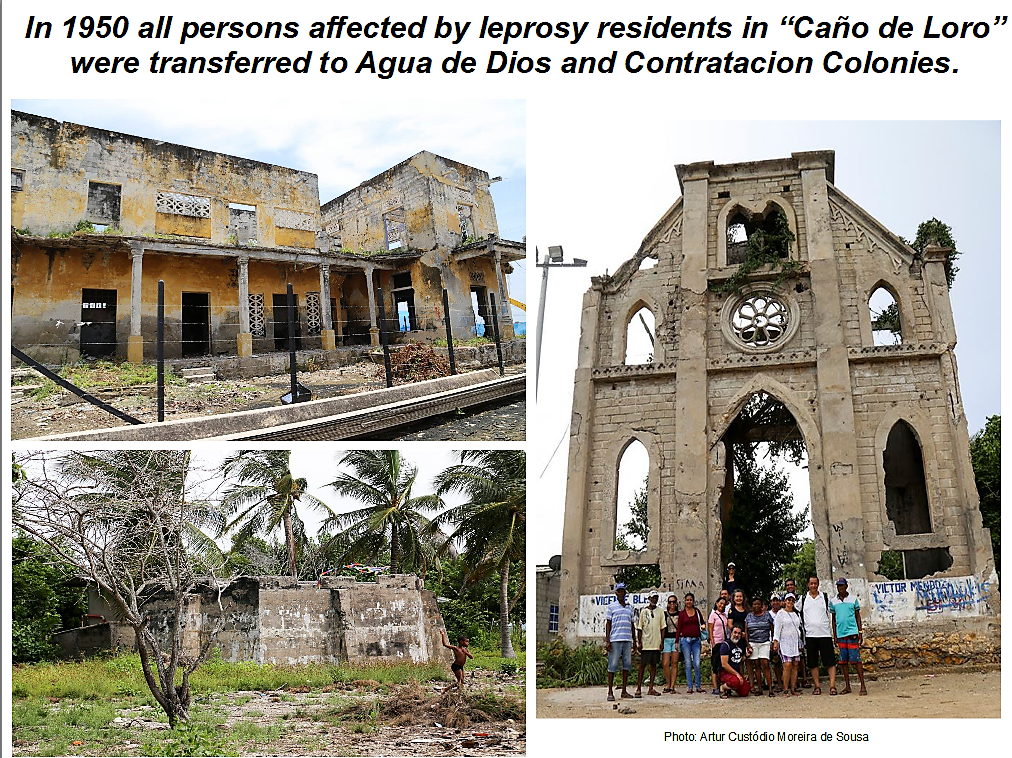
That era of splendor of the island of Tierra Bomba would also have come to an end, the presence of the Colombian state was never the same in this territory. Only the ruins left by the bombing remain of Caño de Loro, the memories of the island’s native elders and the memories of those affected who had a family member living in this Lazaretto.

Fountain:
https://leprosyhistory.org